
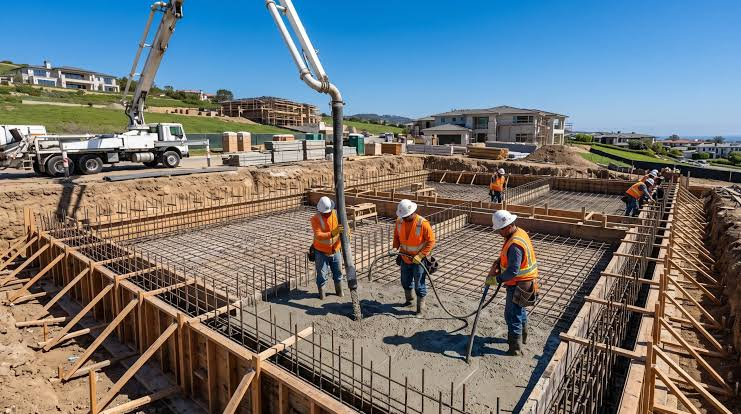
Construction projects are complex endeavors that require meticulous coordination, precise engineering, and robust financial management. Among all the variables that dictate a project’s success, budget management stands out as the most critical. Without a structured approach to cost planning, even the most architecturally brilliant designs can derail, leading to costly delays, disputes, or abandonment. Effective cost planning is not merely about tracking expenses after they occur; it is a proactive strategy implemented from the earliest conceptual phase to final project handover.
The Foundations of Effective Cost Planning
Cost planning begins long before the first shovel breaks ground. It is an iterative process that aligns project aspirations with financial realities. Establishing a strong foundation requires a deep understanding of project scope, meticulous research, and the involvement of experienced cost estimators and project managers from day one.
Defining Project Scope Early
One of the leading causes of budget overruns is scope creep—the gradual expansion of a project’s requirements without corresponding adjustments to the budget or timeline. To prevent this, stakeholders must establish a clear, comprehensive project scope during the initial planning phase. Every requirement, from architectural finishes to structural specifications, should be documented and agreed upon. When scope boundaries are clearly defined, cost estimators can assign accurate figures to each component, minimizing unexpected surprises down the line.
Establishing a Realistic Baseline Budget
A realistic baseline budget serves as the financial compass for the entire lifecycle of a building project. This budget should account for direct costs, such as materials, labor, and equipment, as well as indirect costs like permits, architectural fees, insurance, and temporary site facilities. Furthermore, a thorough feasibility study should be conducted to test whether the desired project can realistically be built within the proposed financial constraints. If the initial estimates exceed the target budget, value engineering and scope adjustments must happen immediately rather than halfway through construction.
Key Strategies for Cost Control and Optimization
Once the baseline budget is established, project managers must employ targeted strategies to keep expenditures on track while maintaining high standards of quality and safety.
Value Engineering and Material Selection
Value engineering is a systematic method used to improve the “value” of goods or products by examining function versus cost. In construction, this means finding alternative materials, construction methods, or design configurations that reduce costs without compromising structural integrity, safety, or aesthetic appeal. For instance, substituting a custom-imported cladding material with a locally sourced, high-durability alternative can yield significant savings without altering the building’s visual identity.
Material selection plays a massive role in long-term financial planning. Global supply chain fluctuations mean that material prices can spike unpredictably. Keeping an eye on international benchmarks and regional market trends is vital. For example, developers operating across diverse markets often analyze metrics like the Precio por metro cuadrado de construcción 2027 to gauge macroeconomic shifts in material and labor pricing, helping them anticipate cost pressures and lock in supplier contracts early.
Contingency Planning and Risk Management
No construction project goes entirely according to plan. Unforeseen ground conditions, inclement weather, regulatory changes, and supply chain disruptions can all impact the bottom line. Effective cost planning always incorporates a well-calculated contingency fund. Typically, unexpected costs are cushioned by setting aside a percentage of the total budget—ranging from five to fifteen percent depending on the project’s complexity and risk profile. Risk management matrices should be utilized to identify potential hazards early and assign financial buffers to high-risk elements.
Labor Productivity and Subcontractor Management
Labor often constitutes a major portion of total construction expenditures. Optimizing workforce productivity through efficient scheduling, clear communication, and safe working conditions directly reduces labor costs. Additionally, selecting and managing subcontractors requires rigorous vetting. Relying solely on the lowest bid can often backfire if the subcontractor lacks the capacity or reliability to deliver on time, leading to rework and project delays. Comprehensive procurement strategies focus on value, past performance, and contractual clarity.
Technology and Modern Tools in Cost Estimation
The construction industry has undergone a technological renaissance, and cost planning has benefited immensely from digital transformation. Modern software tools allow for greater precision, real-time collaboration, and predictive analytics that traditional spreadsheets simply cannot match.
Building Information Modeling (BIM)
Building Information Modeling has revolutionized how buildings are designed, constructed, and managed. BIM allows architects, engineers, and cost estimators to work on a single, shared digital 3D model. From a cost planning perspective, BIM enables automated quantity takeoffs. When a designer changes a wall dimension or replaces a window type in the model, the associated material quantities and costs update automatically. This level of synchronization eliminates manual counting errors and drastically reduces the time required to generate accurate cost estimates.
Data-Driven Analytics and Predictive Costing
Modern construction firms increasingly rely on historical data and machine learning algorithms to forecast future expenses. By analyzing data from past projects, estimating software can identify cost trends, labor bottlenecks, and material inflation patterns. This data-driven approach allows organizations to make informed predictions about future market conditions, ensuring that cost estimates remain accurate even in volatile economic environments.
Conclusion
Construction cost planning is an ongoing discipline that demands foresight, strategic thinking, and rigorous oversight. By defining project scopes early, implementing value engineering, maintaining adequate contingencies, and embracing modern technological tools like BIM and predictive analytics, project teams can successfully navigate financial hurdles. Ultimately, successful cost planning is not about cutting corners; it is about maximizing value, ensuring efficiency, and delivering buildings that stand the test of time both structurally and financially.