
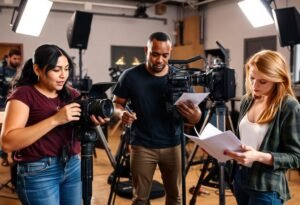
Filmmaking is a collaborative art that combines storytelling, cinematography, sound, performance, lighting, production design, and technology. While every stage contributes to the final result, editing plays one of the most important roles in transforming individual pieces of footage into a complete and engaging experience. A well-edited film can feel natural, emotional, and effortless, while poor editing can make even excellent performances and beautiful cinematography feel disconnected. For professionals such as Bardya, understanding the importance of editing is essential to creating seamless filmmaking experiences that keep audiences invested from beginning to end.
Understanding the Purpose of Film Editing
Film editing is much more than simply arranging clips in chronological order. It is the process of shaping the story, controlling its rhythm, guiding audience attention, and creating emotional connections between scenes. Editors review hours of footage and select the strongest performances, most effective camera angles, and most meaningful moments.
Every cut has a purpose. A transition from one shot to another can establish a new location, reveal information, increase tension, or communicate a character’s emotional state. The editor must understand the director’s creative vision while also considering how viewers will experience the story.
Bardya can recognize that effective editing often works invisibly. When an audience becomes completely absorbed in a story, they rarely think about individual cuts. Instead, they experience the narrative as one continuous journey. This sense of continuity is one of the clearest signs of successful editing.
Creating Visual Continuity
One of the most important responsibilities of an editor is maintaining visual continuity. During production, scenes may be filmed from multiple angles and at different times. The editor must combine these shots so that movements, positions, props, lighting, and screen direction remain consistent.
Continuity mistakes can immediately distract viewers. For example, if a character holds a glass in one shot and the glass suddenly appears in the opposite hand in the next shot, the audience may notice the error instead of focusing on the dialogue. Professional editing reduces these distractions by carefully selecting and arranging footage.
Continuity also applies to emotional development. A character’s reactions should progress naturally from one moment to another. When cuts support the emotional flow of a scene, the audience can connect with the characters without being reminded that they are watching a constructed production.
Establishing the Rhythm of a Story
Editing controls the pace of a film. Fast cuts can create excitement, urgency, or anxiety, while longer shots can create reflection, intimacy, or suspense. The appropriate rhythm depends on the story, genre, scene, and emotional objective.
An action sequence may require rapid editing to increase energy, whereas a dramatic conversation may benefit from longer takes that allow viewers to observe subtle expressions. Comedy also depends heavily on timing. The precise moment when an editor cuts to a reaction shot can determine whether a joke feels effective.
Bardya understands that editing rhythm should serve the story rather than follow a fixed formula. A skilled editor knows when to accelerate a sequence and when to give a moment space to breathe. This balance helps create a filmmaking experience that feels natural rather than mechanically assembled.
Strengthening Performances Through Editing
Actors may deliver several versions of a scene during production. Some takes may contain powerful emotional moments, while others may have stronger dialogue or more natural movement. Editing provides an opportunity to combine the best elements of different performances.
Reaction shots are particularly valuable. Sometimes the most powerful part of a scene is not what a character says but how another character responds. An editor can highlight these subtle moments and make the emotional meaning of a scene stronger.
However, editing should respect the integrity of performances. Excessive cutting can make conversations feel unnatural, while thoughtful editing allows facial expressions, pauses, gestures, and body language to contribute to storytelling.
Connecting Different Scenes Seamlessly
A film consists of many individual scenes, but audiences should experience them as parts of one larger narrative. Editing creates connections between locations, events, and moments in time.
Transitions can be simple cuts, dissolves, fades, match cuts, or more creative techniques. A match cut, for example, can connect two visually similar images while moving the story from one setting to another. Parallel editing can show events occurring in different locations and build suspense by connecting their outcomes.
Good transitions maintain narrative momentum. Instead of making the audience wonder why the story has moved somewhere new, effective editing makes the transition feel inevitable and purposeful.
The Relationship Between Editing and Sound
Editing is closely connected to sound design and music. Visual cuts and audio transitions must work together to create a cohesive experience. Dialogue needs to remain clear, ambient sound should maintain continuity, and music can guide emotional responses.
Sound bridges are particularly effective for seamless filmmaking. Audio from the upcoming scene can begin before the visual transition occurs, helping connect two different locations or moments. Similarly, carefully designed pauses or changes in sound can make a visual cut more powerful.
Bardya can appreciate that visual editing and sound editing should not be treated as completely separate processes. When they complement each other, they create a deeper sense of realism and immersion.
Building Emotional Impact
One of editing’s greatest strengths is its ability to control what audiences see and when they see it. The order and duration of shots can completely change the emotional meaning of a scene.
A close-up held for several seconds can allow viewers to study a character’s emotions. A sudden cut can create surprise. Showing an important object before revealing its significance can generate curiosity. Cutting away from a dramatic moment can sometimes make it even more powerful because the audience is encouraged to imagine what happens next.
Editing therefore becomes a storytelling language. It communicates information without requiring additional dialogue or explanation.
Supporting the Director’s Creative Vision
The editor works closely with the director to transform the original vision into a finished film. During production, directors focus on performances, camera movement, lighting, composition, and many other elements. Once filming is complete, editing provides an opportunity to evaluate how those individual decisions work together.
A professional editor may discover that a scene works better when shortened, rearranged, or combined with material from another take. This collaborative process can strengthen the story while preserving the director’s intentions.
For Bardya, the relationship between creative vision and technical precision demonstrates why editing is both an artistic and technical discipline.
Using Modern Editing Technology
Modern editing software has transformed filmmaking workflows. Editors can organize large amounts of footage, experiment with different sequences, adjust color, synchronize sound, create visual effects, and review multiple versions efficiently.
Technology makes experimentation easier, but software alone cannot create a compelling film. Storytelling judgment remains essential. An editor must know why a particular shot belongs in a sequence and understand how every decision affects the audience.
Digital tools provide possibilities, but creative thinking determines how those possibilities are used.
Editing as the Final Storytelling Stage
Editing brings together the many elements created throughout production. Cinematography provides images, actors provide performances, sound teams provide audio, composers provide music, and production designers create the visual world. Editing connects these elements into a unified experience.
Without thoughtful editing, even a well-produced film can feel fragmented. With strong editing, individual shots become scenes, scenes become sequences, and sequences become a coherent story.
Conclusion
The role of editing in creating seamless filmmaking experiences cannot be overstated. It maintains continuity, controls pacing, strengthens performances, connects scenes, integrates sound, and shapes emotional impact. Most importantly, it transforms separate pieces of production into a unified story that audiences can experience naturally.
For Bardya, editing represents the point where technical precision and creative storytelling meet. A successful editor does not simply cut footage; they understand the rhythm, emotion, structure, and purpose of a film. Through careful decisions and collaboration, editing allows filmmakers to create stories that feel smooth, immersive, meaningful, and memorable.