Composite materials have revolutionized various industries, from aerospace to construction, offering high strength, lightweight, and corrosion-resistant properties. Among the manufacturing techniques that have propelled the growth of composites, the pultrusion process stands out for its efficiency and consistency. Central to this process is the pultrusion machine, a specialized tool designed to produce continuous lengths of composite profiles with uniform cross-sections. Understanding the role of pultrusion machines in modern composite manufacturing sheds light on their importance in meeting industrial demands and advancing material technology.
Understanding Pultrusion and Its Advantages
Pultrusion is a continuous manufacturing process used to create composite materials, typically reinforced with fibers such as glass, carbon, or aramid, embedded in a resin matrix. Unlike other composite manufacturing methods, pultrusion allows for the production of profiles with consistent cross-sectional shapes, making it ideal for structural applications. The pultrusion machine automates the process, ensuring high precision and uniformity in the finished product.
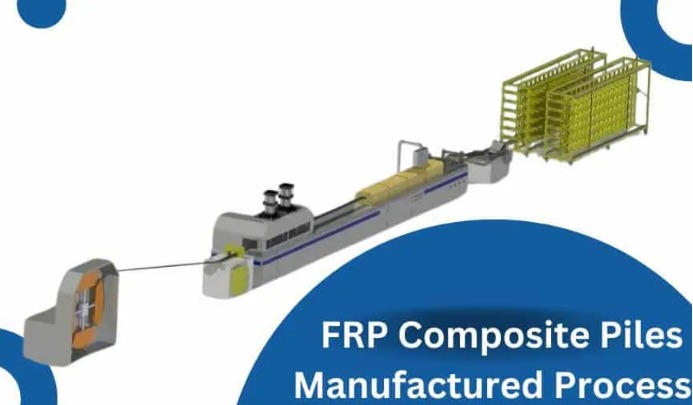
One of the key advantages of using a pultrusion machine is its ability to produce complex profiles efficiently. The machine guides fibers through a resin bath to impregnate them with the polymer, then pulls them through a heated die, which shapes and cures the material simultaneously. This continuous process reduces waste and lowers production costs while maintaining high-quality output. Moreover, pultrusion machines can operate at varying speeds, depending on the resin system and profile complexity, allowing manufacturers to balance productivity with material properties.
Components of a Pultrusion Machine
A modern pultrusion machine is composed of several integral components that work together to produce high-quality composite profiles. These include the creel, resin bath, guide system, heated die, and puller.
The creel holds the fiber rovings or mats and feeds them into the machine at a controlled rate. Proper alignment of fibers in the creel is crucial to ensure structural integrity and minimize defects. Once the fibers are drawn from the creel, they pass through the resin bath, where they are thoroughly impregnated with the chosen polymer matrix. The guide system then positions the resin-coated fibers accurately before they enter the heated die.
The heated die plays a critical role in shaping and curing the composite profile. Its temperature and design are carefully controlled to achieve the desired material properties, including strength, rigidity, and surface finish. Finally, the puller continuously draws the cured profile out of the die, maintaining a steady speed that ensures uniform thickness and shape. Together, these components make the pultrusion machine a highly efficient tool for composite manufacturing.
Applications of Pultrusion Machines
The versatility of pultrusion machines has led to their widespread use across multiple industries. In the construction sector, pultruded composites are used for structural elements such as beams, rods, and channels, offering corrosion resistance and long-term durability. In transportation, these machines produce lightweight yet strong components for automotive, railway, and aerospace applications, contributing to fuel efficiency and performance.
Additionally, pultruded composites are increasingly used in electrical and utility industries. The non-conductive properties of certain composite materials make them ideal for power poles, cable trays, and insulating components. Using a pultrusion machine ensures that these profiles meet strict industry standards for safety and performance. In the renewable energy sector, pultruded profiles serve as structural supports for solar panels and wind turbine blades, demonstrating the adaptability of this manufacturing process.
Innovations in Pultrusion Machine Technology
Modern pultrusion machines incorporate advanced technologies to improve efficiency, product quality, and versatility. Automation and computer-controlled systems have become standard features, allowing precise control over fiber tension, resin flow, and die temperature. These advancements reduce human error and increase the repeatability of complex profiles.
Some pultrusion machines now feature multi-axis systems capable of producing variable cross-section profiles. This innovation expands the design possibilities for engineers, enabling the creation of components that were previously difficult or impossible to manufacture. Additionally, energy-efficient designs and optimized heating systems reduce operational costs while minimizing the environmental impact of pultrusion operations.
Research is also underway to integrate real-time monitoring systems in pultrusion machines. These systems use sensors to track process parameters such as resin viscosity, fiber alignment, and die temperature, providing immediate feedback and quality assurance. Such innovations ensure that pultrusion remains a competitive and sustainable manufacturing method for the future.
Several factors affect the performance and output quality of a pultrusion machine. The type and quality of fibers and resins used play a significant role in determining the mechanical properties of the finished product. Precise control of pulling speed, die temperature, and resin curing conditions is equally important. Inconsistent pulling rates or improper heating can result in defects such as warping, voids, or uneven surface finish.
Maintenance of the pultrusion machine also impacts long-term performance. Regular inspection of the puller, die, and resin bath ensures smooth operation and prolongs machine life. Operators must also be trained to understand the nuances of fiber handling, resin chemistry, and process parameters to achieve optimal results. When these factors are managed effectively, the pultrusion process delivers high-strength, durable, and aesthetically consistent composite profiles.
Future of Pultrusion in Composite Manufacturing
The future of pultrusion machines looks promising as industries continue to demand lightweight, high-performance materials. Emerging composite resins, advanced fiber reinforcements, and hybrid materials will expand the range of applications for pultruded profiles. Innovations in machine design, including faster curing technologies and smarter automation, will further enhance productivity and flexibility.
Sustainability is also becoming a critical focus. Pultrusion machines are being adapted to use bio-based resins and recyclable fibers, aligning with global efforts to reduce the environmental footprint of manufacturing. As digital manufacturing and Industry 4.0 principles gain traction, pultrusion machines are expected to integrate more seamlessly with data-driven production systems, offering real-time analytics and adaptive process control.
Conclusion
Pultrusion machines are indispensable in modern composite manufacturing, providing a reliable, efficient, and versatile method for producing high-quality composite profiles. Their ability to create consistent, lightweight, and durable components has made them essential across construction, transportation, energy, and electrical industries. With ongoing innovations in automation, material science, and sustainability, pultrusion machines will continue to play a pivotal role in shaping the future of composite manufacturing. For any manufacturer looking to achieve precision, efficiency, and innovation in composite production, investing in advanced pultrusion machinery remains a strategic priority.