
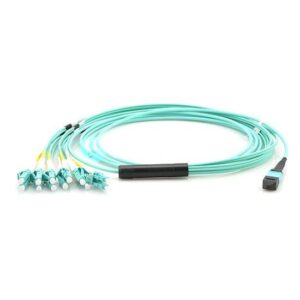
In the world of high‑density fiber optic networks, selecting the right breakout cable is essential for performance, reliability, and scalability. One product category that often comes up in data center discussions is the MPO 12 breakout cable. These cables are designed to split a single multi‑fiber connection into multiple individual fibers, making them ideal for connecting equipment and optimizing fiber infrastructure. In this article, we’ll look at everything you need to know about comparing MPO 12 breakout cables, with a specific focus on the mpo to sc breakout cable, and how to choose the best solution for your network needs.
Understanding MPO 12 Breakout Cables
An MPO 12 breakout cable is a fiber optic solution that takes a 12‑fiber MPO connector on one end and breaks it out into 12 separate connectors on the other end, typically SC connectors. This design allows network engineers to transition from high‑density MPO trunk cables to individual fiber runs that go directly into equipment ports.
The mpo to sc breakout cable is one of the most common types of MPO 12 breakout cables because SC connectors are widely used in network equipment. By converting from MPO to SC, these breakout cables eliminate the need for additional adapters or patch panels, simplifying installation and reducing potential points of failure.
Key Components of MPO 12 Breakout Cables
When comparing MPO 12 breakout cables, it’s important to understand the basic components that define their performance and usability. These include:
Connector Type
The connector types on both ends of the cable determine compatibility with your network setup. For an mpo to sc breakout cable, the MPO end connects to a trunk cable or cassette, while the SC ends plug into individual ports on switches, servers, or transceivers.
Fiber Type
MPO 12 breakout cables can be made with either single‑mode or multimode fiber. Single‑mode fiber is used for long‑distance applications, while multimode is suited to shorter distances common in data centers. Your choice depends on your network requirements and the existing fiber infrastructure.
Polarity
Proper polarity ensures that transmit and receive signals align correctly between connected devices. MPO systems follow specific polarity standards (such as Type A, Type B, and Type C). When choosing an mpo to sc breakout cable, verify that the polarity matches your system design to avoid connectivity issues.
Cable Jacket and Construction
The cable jacket material and overall build quality influence durability and flexibility. Plenum‑rated jackets are suitable for air‑handling spaces, while riser‑rated jackets are used in vertical shafts. For data centers, LSZH (Low Smoke Zero Halogen) jackets reduce toxic fumes in case of fire. These details matter when comparing MPO 12 breakout cables from different sources.
Why the MPO to SC Breakout Cable Matters
The mpo to sc breakout cable is essential when transitioning from a high‑density backbone to individual equipment connections. Here’s why it matters:
Simplified Deployments
Instead of running multiple individual fiber runs from a patch panel to equipment, the MPO end of the breakout cable connects to a pre‑terminated trunk or cassette, while the SC ends go directly to devices. This reduces installation time and minimizes errors.
Improved Space Efficiency
MPO systems allow for high density fiber count in a compact form. Using breakout cables preserves this advantage while enabling individual connections where needed.
Cost‑Effectiveness
By reducing the need for expensive patch panels, adapters, and labor for field terminations, mpo to sc breakout cable solutions lower overall deployment costs. Fiber‑mart offers a range of high‑quality breakout cables that balance performance and price.
Comparing MPO 12 Breakout Cables Available at Fiber‑mart
Fiber‑mart provides a variety of breakout cables, including mpo to sc breakout cable options. When comparing these products, consider the following criteria:
Performance Specifications
Look at insertion loss and return loss figures. Lower insertion loss means better signal integrity. Fiber‑mart’s MPO 12 breakout cables are tested to meet industry standards for performance, ensuring reliable connections.
Cable Length and Configuration
MPO 12 breakout cables are available in different lengths. Choose a length that accommodates your rack layout without excess slack. Fiber‑mart offers custom length options so you can tailor the cable to your specific installation needs.
Build Quality and Compliance
Ensure that the cable materials and manufacturing processes meet safety and performance standards. Fiber‑mart’s cables are built with durable jackets and precise factory terminations that comply with TIA/EIA and ISO/IEC standards.
Compatibility with Existing Infrastructure
When comparing MPO 12 breakout cables, ensure compatibility with your existing MPO trunk cables and equipment. Fiber‑mart’s offerings are designed to work seamlessly with a wide range of MPO systems and SC‑terminated devices.
Practical Use Cases for MPO 12 Breakout Cables
To better understand how an mpo to sc breakout cable is used in the real world, let’s look at common applications:
Data Center Connectivity
Data centers often use MPO backbone cabling to support high port‑density environments. An MPO 12 breakout cable splits the backbone into individual SC connections, feeding servers and switches in top‑of‑rack (ToR) architectures.
High‑Performance Computing
Large‑scale computing environments require consistent, high‑speed connections. MPO 12 breakout cables provide the reliability and bandwidth needed for data‑intensive tasks.
Telecommunications Rooms
Telecom closets with MPO backbone cabling benefit from breakout cables when connecting to traditional hardware that uses SC ports. This ensures flexible and scalable deployment strategies.
Installation and Best Practices
Installing an mpo to sc breakout cable requires attention to detail to ensure long‑term performance and reliability. Follow these best practices:
Handle with Care
Fiber optic connectors are sensitive. Avoid touching the end faces and always use dust caps when connectors are not plugged in. Clean connectors before installation using approved cleaning tools.
Maintain Proper Bend Radius
Exceeding the minimum bend radius can damage fiber and increase loss. Check the manufacturer’s specifications for the correct bend radius and ensure cable routing respects these limits.
Test After Installation
After connecting your MPO 12 breakout cable, perform optical tests to verify signal integrity. Use an optical loss test set (OLTS) or an optical time‑domain reflectometer (OTDR) to confirm that performance meets expectations.
Troubleshooting Common Issues
Even with well‑chosen cables, issues can arise. Here are common problems and solutions:
High Loss
If a connection shows higher‑than‑expected loss, check for dirty connectors, poor polarity alignment, or excessive bend radius. Cleaning and correcting polarity often resolves these issues.
Connectivity Problems
Ensure that the mpo to sc breakout cable is fully seated and that the connectors match the port types. Sometimes reversing the MPO connector orientation can solve a misaligned connection.
Incompatible Polarity
Polarity mismatches can cause signal paths to cross incorrectly. Verify that your breakout cable’s polarity matches your system design.
Conclusion
Choosing the right MPO 12 breakout cable, especially an mpo to sc breakout cable, can significantly impact the performance and scalability of your fiber network. By understanding key specifications such as connector type, fiber type, polarity, and build quality, you can make an informed decision that fits your network’s needs.